Commercial Solar Panels in Stratford-upon-Avon
Free site survey, G99 DNO application handled in-house, and a written quote with no hidden costs for businesses across CV37.
- 4.9 / 582+ reviews
- NAPIT registeredqualified electricians
- No hidden costsfree written quote
- In-house teamno subcontractors
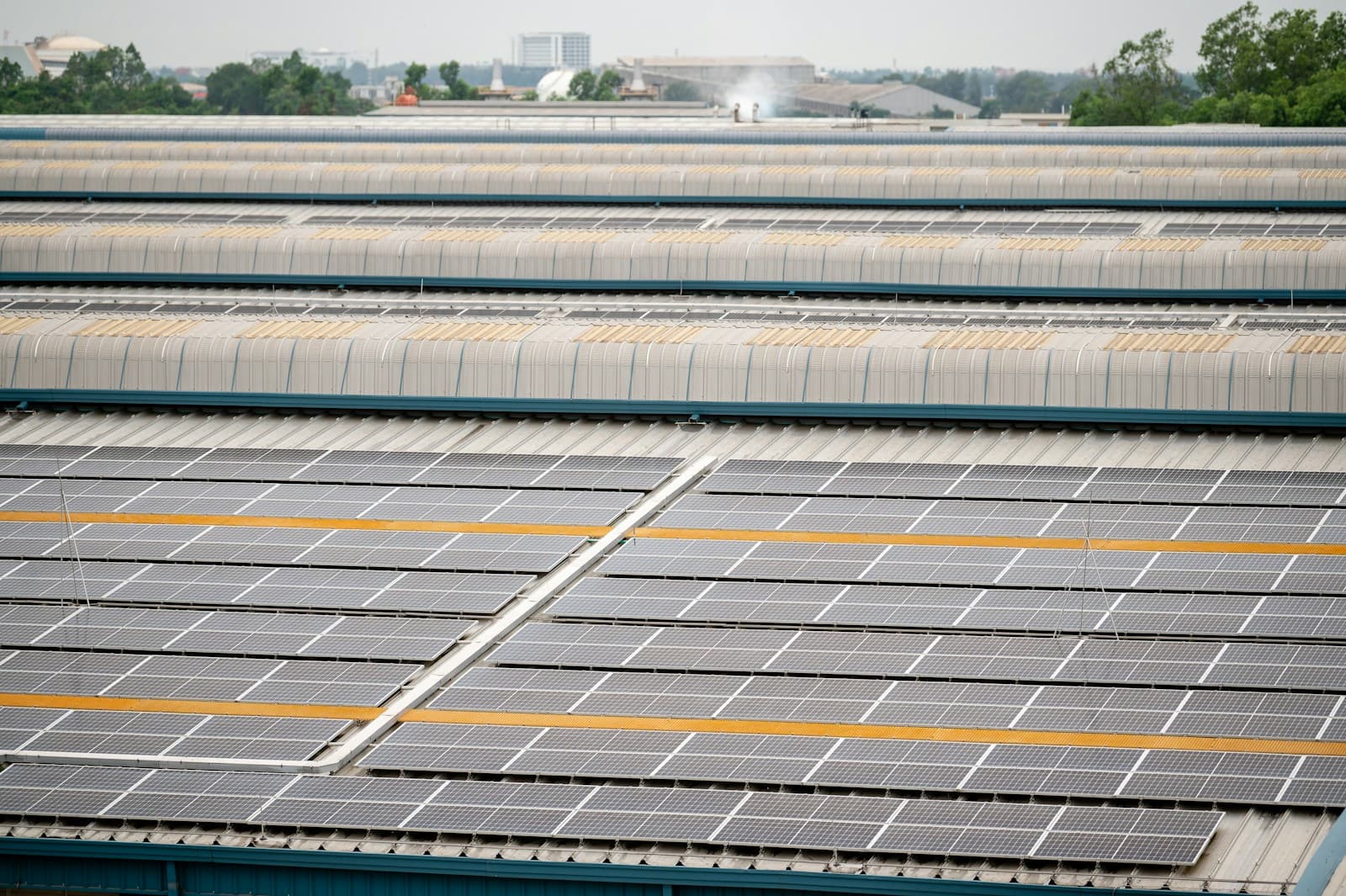
Stratford-upon-Avon draws visitors year-round, but behind the tourism economy sits a broad mix of working businesses: manufacturing units on the edge of town, care homes serving an ageing population, schools, hotels, and the SMEs that keep the town running day to day. All of them share rising energy costs, and all of them have roof or ground space that could be generating electricity instead of sitting idle. Commercial solar PV converts that space into a long-term asset, cutting your grid consumption and giving you something concrete to report against your ESG or net-zero targets.
We are MCS-certified installers based in Redditch, roughly 30 minutes north-west via Alcester, and we handle every stage of a commercial install ourselves. That means the free site survey, the system design, the G99 DNO application for installs over 30 kWp, the physical installation, and the commissioning paperwork. Nothing is sub-contracted out to reduce our margin. We know the planning context around Stratford, including its large central conservation area and the more solar-friendly commercial plots in Bishopton, Tiddington, and the outer business parks.
What's included
Every Stratford-upon-Avon job includes.
A free, no-obligation site survey carried out on your premises, covering roof orientation, structural loading, shading analysis, and your current metering and supply arrangement, so the system is designed around real data rather than assumptions.
Full G99 DNO application handled in-house for systems over 30 kWp, including all correspondence with the network operator, so you do not have to navigate that process yourself or pay a separate consultant.
Written, itemised quotation broken down by component, labour, and grid-connection costs, with a projected ROI specific to your site's consumption profile and roof conditions, no ballpark figures or hidden extras.
MCS-certified installation by our own engineers, covering panel mounting, inverter and isolator fitting, cable management to BS 7671, and commissioning to manufacturer and MCS standards.
Full system handover pack including generation meter readings, MCS certificate, warranty documentation, and a plain-English guide to monitoring your system's output through the inverter app or portal.
IWA insurance-backed guarantee on the installation, giving you financial protection on the workmanship independent of our business, which matters for commercial asset registers and lender due diligence.
Local knowledge
Commercial Solar in Stratford-upon-Avon.
Stratford-upon-Avon sits in south Warwickshire at roughly 50 metres above sea level, on relatively flat agricultural land. That geography means good solar irradiance with few natural shading obstructions, and the town's position in the wider Avon valley gives it slightly more hours of usable sunshine annually than parts of the West Midlands further north. For commercial operators, that translates into strong generation potential across a wide range of roof types, from the shallow-pitched industrial units on the Arden Road and Maybird area to the flat felt or single-ply roofs common on post-war commercial buildings throughout CV37.
The central conservation area is extensive and covers much of the town's historic core, including buildings facing onto Bridge Street and the areas immediately surrounding the Royal Shakespeare Theatre. Planning permission for visible solar panels on listed or conservation-area buildings is not automatic, and your planning officer's view will depend on the building's significance, the proposed panel positions, and the degree of visual impact from public viewpoints. However, many commercial properties in Stratford sit outside the core conservation boundary: the retail parks, care homes, school campuses, and light-industrial estates on the town's outer edges are generally not listed and not in the most sensitive zones. We will tell you honestly at survey stage whether your building is likely to need a planning application and whether the roof is suitable.
Shottery, Bishopton, and Tiddington are the outer villages most commonly associated with residential development, but they also contain small business premises, farm diversification projects, and agricultural buildings that are well suited to larger ground-mount or barn-roof arrays. Agricultural and commercial buildings in open countryside often fall under permitted development for solar, subject to scale and siting conditions, so the planning picture outside the town centre is generally more straightforward. Our team is familiar with Stratford District Council's approach and will flag any constraints before you commit to anything.
Why Stratford-upon-Avon
Why Stratford-upon-Avon chooses us.
Stratford businesses choose us because we handle the whole project, from survey to DNO sign-off, with our own certified engineers rather than passing work down a sub-contractor chain.
MCS certification covers both the design and installation of your system, which is a requirement for grid-connection approval and is the standard commercial lenders, landlords, and energy auditors expect to see on the documentation.
We manage G99 DNO applications in-house for installs over 30 kWp. That removes a significant administrative burden from your facilities or finance team and keeps the project on a single timeline rather than depending on a third party.
Every quote is written, itemised, and tied to a site-specific ROI projection based on your actual consumption data and roof conditions. You will not receive a generic estimate that shifts once work starts.
We carry full public liability and employer's liability insurance, and our installations come with an IWA insurance-backed guarantee, which is independently underwritten and remains valid regardless of changes to our business.
Our base in Redditch puts us roughly 30 minutes from Stratford via the A435 and Alcester. We cover commercial sites across south Warwickshire regularly and can turn around a site survey appointment quickly without a long lead time.
How it works
From enquiry to job done.
- 01Postcode check
Enter your CV37 postcode or call us on 01527 337155. We confirm your site falls within our coverage area and take a brief note of your property type, roof construction, and approximate annual energy consumption so the survey visit is focused from the start.
- 02Free site survey
One of our MCS-certified engineers visits your premises at a time that suits your operations. We assess roof orientation, pitch, shading, structural loading, existing metering, and your DNO connection to design a system sized for your actual consumption rather than a generic template.
- 03Written quote issued
We send a fully itemised written quotation covering panels, inverters, mounting, cabling, DNO application costs where applicable, and projected ROI for your site. No hidden line items appear later. You can compare it directly against any other quote you receive.
- 04Date booked
Once you accept the quote we agree an installation date that minimises disruption to your business. For installs requiring G99 DNO approval we initiate that application immediately so grid-connection approval runs in parallel with your preparation time.
- 05Job done, photos sent
Our engineers complete the installation, commission the system, and carry out final generation checks before leaving site. We send you a full handover pack including MCS certificate, warranty documents, meter readings, and before-and-after photographs for your records.
Our work
Recent Commercial Solar installs.
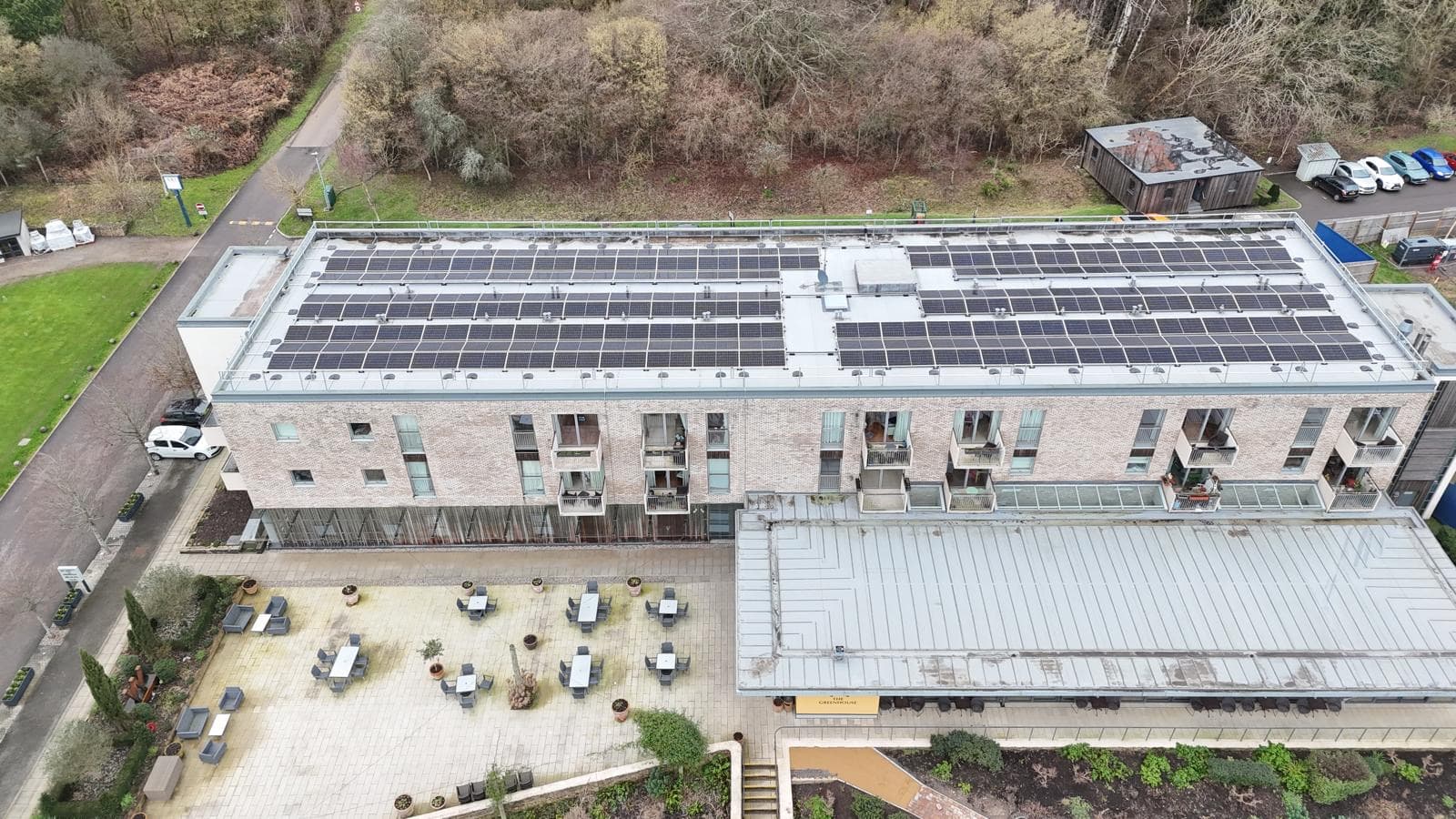
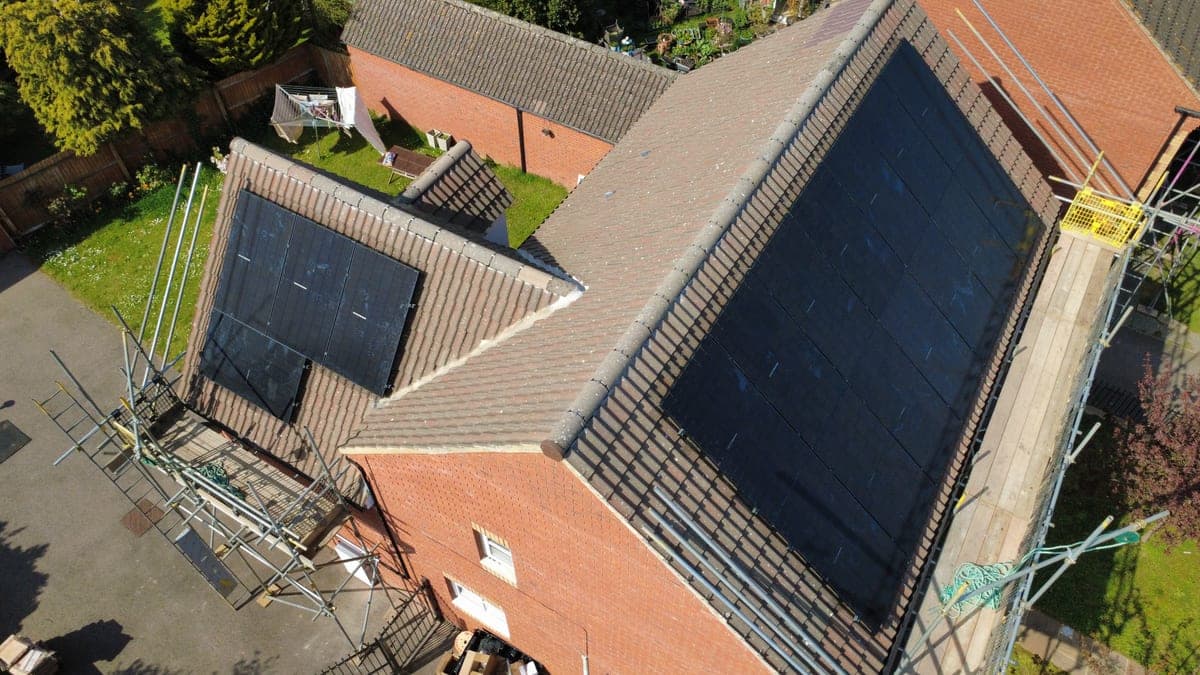
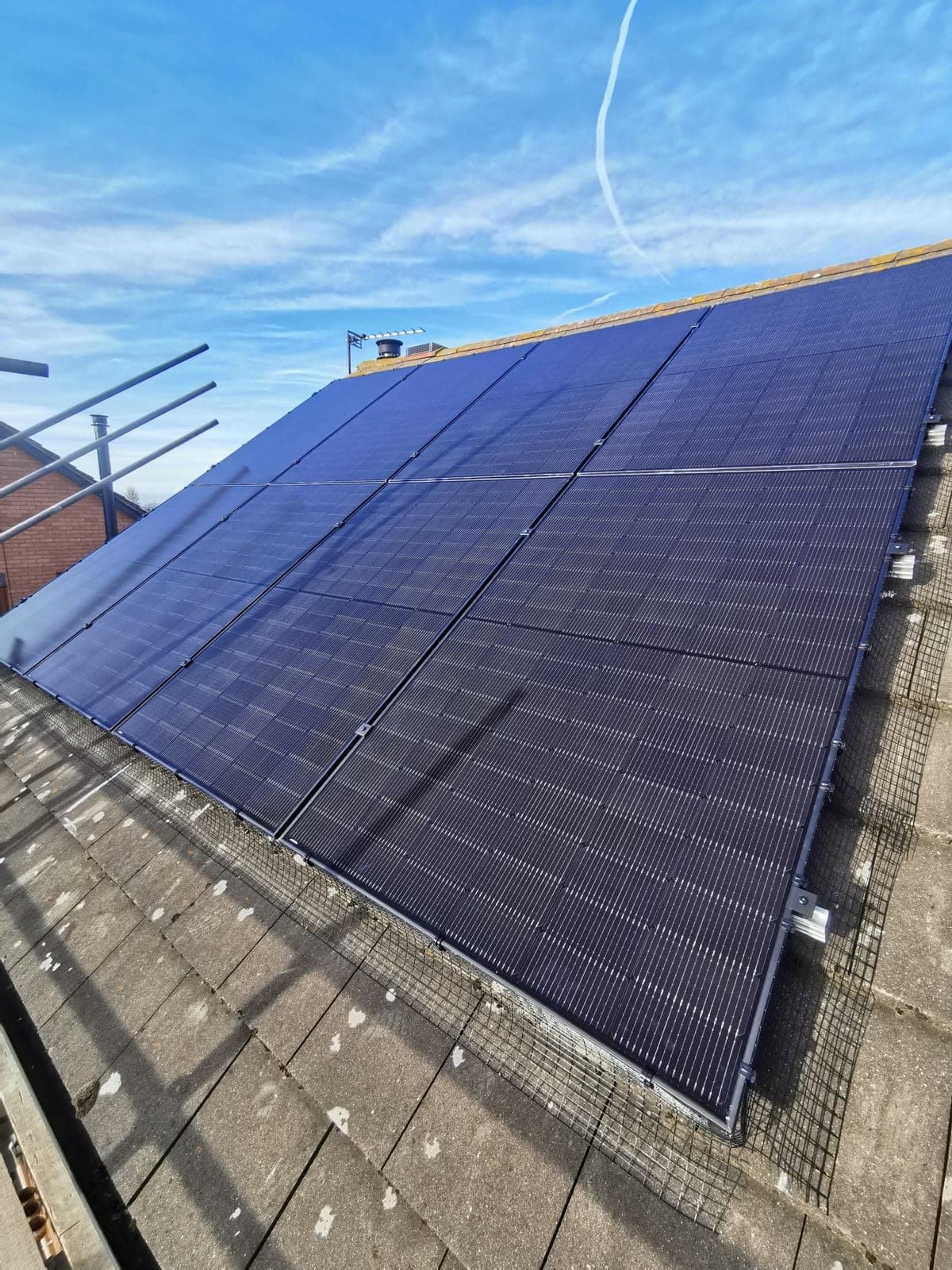
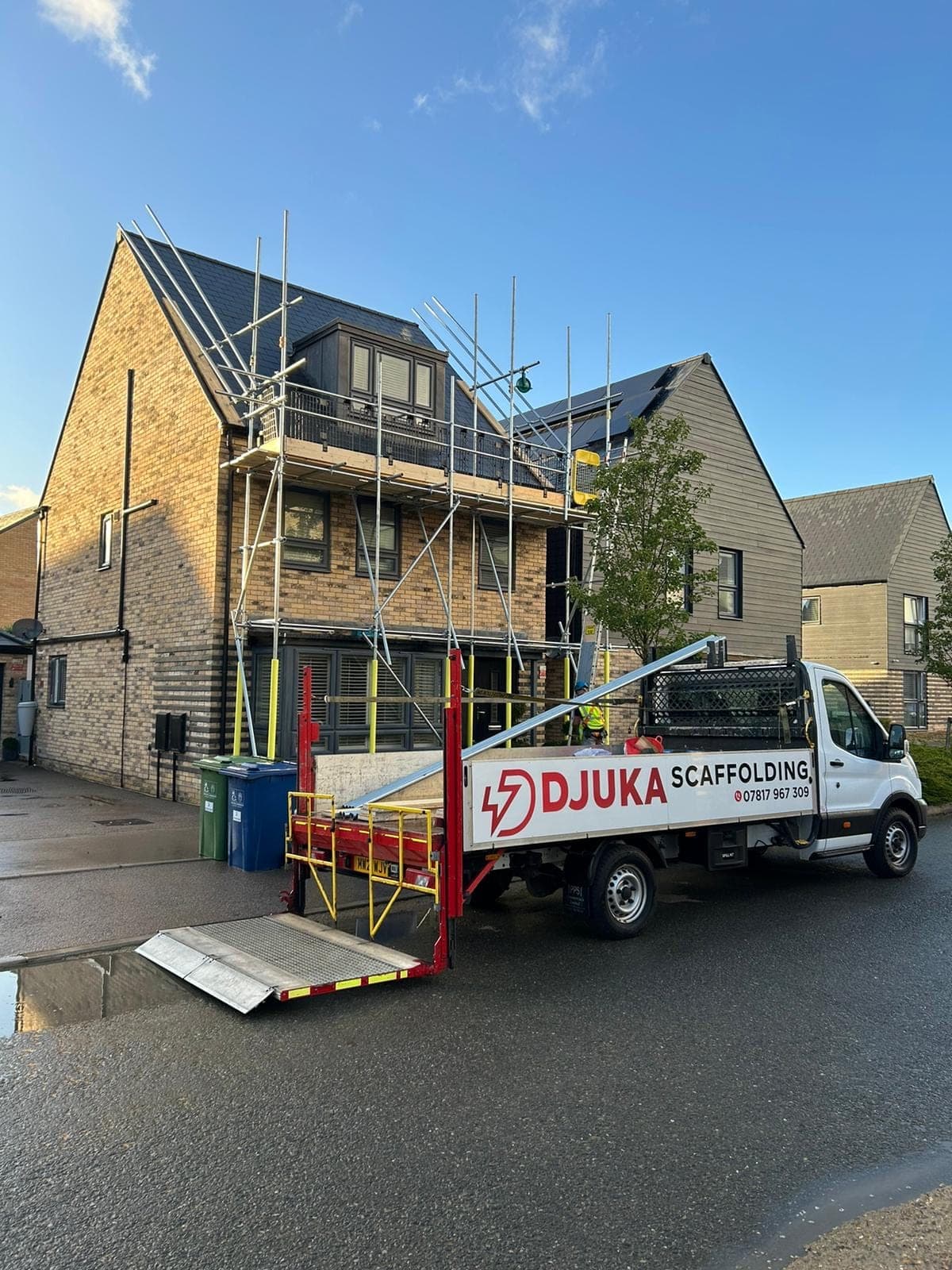
A selection of our recent commercial solar work across the Midlands.
Often booked together
Pairs well with.
Adding battery storage to a commercial solar install lets your business retain generation through evening and overnight periods, reducing grid draw during peak-rate hours and improving the overall return on your investment.
Commercial premises with solar generation increasingly pair the install with on-site EV charging, using their own generated electricity to power a fleet or staff and visitor charge points rather than drawing from the grid.
Larger commercial solar installs often require DB upgrades, new isolator positions, or sub-metering work. Having our NAPIT-registered electricians handle that alongside the solar installation avoids the cost and delay of a separate contractor.
Worth knowing
Before you book in Stratford-upon-Avon.
Stratford's conservation area is among the largest in Warwickshire. If your commercial building falls within it, or is listed, you will need to confirm whether permitted development rights apply before installation. We carry out this check at survey stage and can advise on whether a formal application is likely to be required.
Flat-roof commercial installations require a structural survey to confirm the roof membrane and supporting structure can carry the additional dead load of a ballasted or mechanically fixed array. We assess this at the site survey and will tell you plainly if additional structural work is needed before panels go on.
For systems over 30 kWp, G99 DNO approval from National Grid Electricity Distribution is a legal requirement before commissioning. The process can take several weeks depending on network capacity in your area. We handle this in-house and factor the timeline into your project plan so it does not delay your go-live date unexpectedly.
FAQs
Stratford-upon-Avon questions.
Do I need planning permission for commercial solar panels in Stratford-upon-Avon?
It depends on your building and its location. Many commercial properties outside Stratford's central conservation area benefit from permitted development rights for rooftop solar, subject to conditions around size, placement, and proximity to listed buildings. Properties within the conservation area, or listed buildings, are more likely to need a formal planning application. We check your building's status at the site survey stage and give you a plain assessment of what is likely to be required before any work is agreed. We do not proceed where consent is needed until you have it.
What is the G99 DNO application and does it affect my install timeline?
G99 is the engineering recommendation that governs how generation systems above 30 kWp connect to the public distribution network. Before your system can be commissioned, National Grid Electricity Distribution must approve the connection. The process involves submitting technical design documents and can take several weeks depending on local network capacity. We handle the entire G99 application in-house, including all technical correspondence with the DNO. We initiate it as soon as your quote is accepted so that approval runs alongside your preparation period rather than adding weeks to your go-live date.
Can you install solar on a flat commercial roof in Stratford?
Yes. Flat roofs are common on commercial premises in Stratford, particularly on post-war retail, light-industrial, and care-home buildings. Flat-roof installs typically use a ballasted or mechanically fixed mounting system optimised for low pitch angles to maximise generation while minimising wind loading. Before installation we carry out a structural assessment to confirm the roof membrane and supporting structure can carry the additional load. If we identify any concerns with the roof condition or structure we will tell you at survey stage, clearly and without charge, before you commit to anything.
How long does a commercial solar installation take?
The physical installation for a typical commercial rooftop system takes between one and four days on site, depending on system size, roof type, and the complexity of the electrical connection. However, the overall project timeline from survey to a commissioned system is longer, primarily because of the G99 DNO approval period for systems over 30 kWp. We give you a realistic end-to-end timeline in your written quotation so you can plan around it. We will not give you an optimistic estimate just to win the job; an accurate timeline is more useful to your operations team.
Will commercial solar work for a care home or school in the Stratford area?
Care homes and schools are among the strongest candidates for commercial solar because they typically consume a large proportion of their electricity during daylight hours, which is when a solar array generates most. Both types of building also benefit from the ESG and net-zero reporting angle, which is increasingly relevant to Care Quality Commission inspections and Ofsted commentary on sustainability. We have experience designing systems for both building types. Site surveys are arranged at a time that avoids disruption to residents or pupils, and we can work in phases if the building cannot accommodate a full installation in one visit.
Do you offer battery storage alongside commercial solar in Stratford?
Yes. Battery storage can be designed into your system from the outset or added to an existing solar install. For commercial premises with evening or overnight energy consumption, such as hospitality venues, care homes, or manufacturing units running later shifts, storage significantly increases the proportion of your own generated electricity that you actually use rather than exporting to the grid. We assess whether battery storage makes economic sense for your specific consumption profile during the site survey and include the option in your written quotation if it is likely to improve your return on investment.
Our commitment
We limit how many commercial installs we run concurrently so that a qualified engineer, not an apprentice working alone, oversees every stage of your project. That means we are not always the fastest quote to land in your inbox, but it does mean the system is designed properly, the DNO paperwork is accurate first time, and the installation passes inspection without remedial visits. For a long-life commercial asset, that matters more than speed.
Who we are
Djuka Electrics is a MCS-certified and NAPIT-registered electrical contractor based in Beoley, Redditch, Worcestershire. We install commercial solar across south Warwickshire, including Stratford-upon-Avon and the surrounding CV37 area, as part of our broader coverage across the Midlands. Every site survey is carried out by one of our own engineers, and we publish real photographs and verified reviews from completed commercial projects.
Want everything we offer in Stratford-upon-Avon? Solar, battery storage, EV charging, electrical work and CCTV are all on our Stratford-upon-Avon services page.
Stratford-upon-Avon hubNearby
Commercial Solar near Stratford-upon-Avon
More in Stratford-upon-Avon
Other services we offer here
Ready for your free commercial solar quote in Stratford-upon-Avon?
Send your postcode and a few details. Within 24 hours you’ll have an honest, written quote from a qualified Midlands electrician, no pushy sales calls, no hidden charges.