Commercial Solar Panels in Birmingham
Free site survey, MCS-certified installation, and G99 DNO applications handled in-house for Birmingham businesses, schools, and care homes.
- 4.9 / 582+ reviews
- NAPIT registeredqualified electricians
- No hidden costsfree written quote
- In-house teamno subcontractors
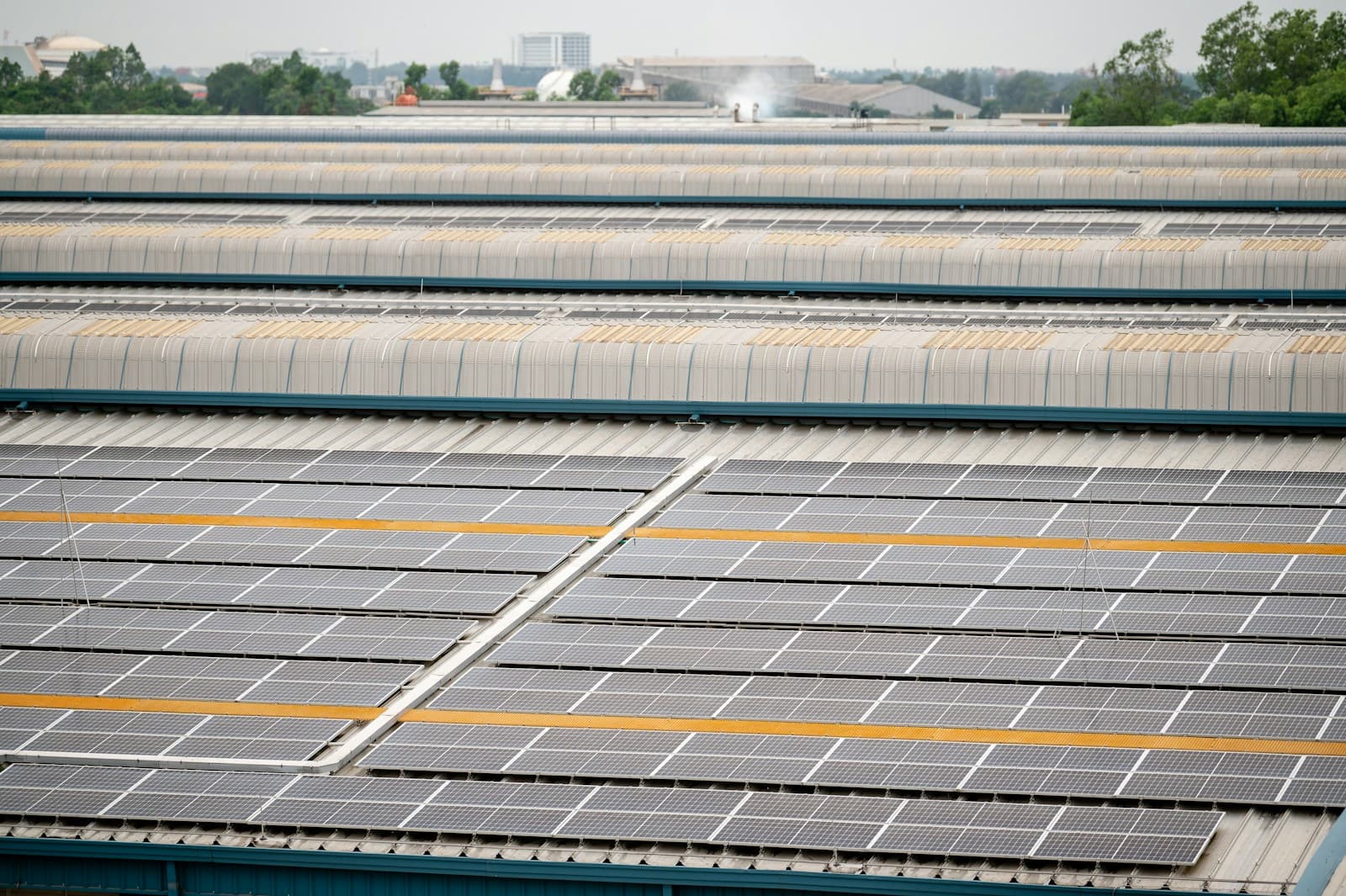
Birmingham businesses are sitting on some of the most underused roof space in the Midlands. Warehouses in Aston, retail units in Selly Oak, schools across Erdington, offices in Digbeth: every one of those roofs is a potential power station. We design and install commercial solar PV systems for SMEs, schools, care homes, and industrial premises across Birmingham's B-postcodes and the wider West Midlands, handling the full process from site survey to grid connection.
Where some installers hand off the paperwork and leave you to figure out the rest, we manage G99 DNO applications in-house for systems over 30 kWp. We are MCS-certified for solar and NAPIT-registered for the electrical work, so you are not dealing with two separate contractors. One point of contact, one quality standard, one written quote with no hidden costs.
What's included
Every Birmingham job includes.
A thorough free site survey covering roof structure, orientation, shading analysis, and existing electrical infrastructure, so your quote reflects the actual conditions of your building rather than a generic assumption.
Full system design including panel layout, inverter selection, and cable routing, shared with you before any work begins so you can see exactly what is being installed and why each component was chosen.
Handling of the G99 DNO application to your distribution network operator on your behalf for systems over 30 kWp, including all supporting documentation, keeping the project on programme without placing the administrative burden on you.
MCS-certified installation carried out by our own NAPIT-registered engineers, not subcontracted labour, with all work tested and commissioned to current Part P and IET wiring regulations standards.
Handover pack including system documentation, monitoring app setup, MCS certificate, and performance benchmarks, so your sustainability and ESG reporting team has everything it needs from day one.
Before-and-after photographs of the installation, a signed commissioning report, and a walkthrough with your facilities manager or nominated contact so the system is fully understood by whoever will be monitoring it daily.
Local knowledge
Commercial Solar in Birmingham.
Birmingham's commercial property stock is as varied as any city in the UK. You will find late-Victorian brick warehouses in Digbeth and Deritend sitting alongside 1970s flat-roof factories in Witton and Tyseley, modern steel-frame distribution units along the A45 corridor, and purpose-built schools or care homes scattered across every borough from Handsworth to Kings Heath. That variety matters for solar design. A flat-roof warehouse in Smethwick needs a ballasted mounting system designed around the roof membrane and structural loading; a pitched-roof school in Moseley might need heritage-sensitive panel placement if it sits near a conservation area. We survey each site individually rather than applying a single template.
Birmingham's central location and relatively low altitude mean it receives a broadly average level of UK solar irradiance, comparable to much of the Midlands. That is not a barrier. Large commercial roofs generate meaningful export and self-consumption figures even in cloudier months, and the economics of commercial solar are driven as much by the scale of on-site consumption as by peak summer output. Industrial and logistics premises running machinery, refrigeration, or EV-charging infrastructure during daylight hours are particularly well suited to commercial PV because so much generation is consumed directly rather than exported. We model self-consumption versus export for every site so you receive an honest picture of financial return.
The city's push towards net-zero and the growing weight placed on ESG credentials by funders, tenants, and procurement panels has increased demand for solar across Birmingham's commercial sector noticeably. Schools and academy trusts are under pressure to reduce energy costs and evidence environmental action. Multi-site retailers and logistics operators in the Birmingham area are beginning to treat rooftop solar as a standard capital investment rather than a green extra. Battery storage is increasingly requested alongside new installs, allowing businesses to shift cheap overnight grid power or store midday solar generation for use during evening peak-tariff periods. We design battery systems to work alongside commercial PV from the outset, so the two systems are properly integrated rather than bolted together after the fact.
Why Birmingham
Why Birmingham chooses us.
Birmingham businesses choose us because we handle the parts most installers pass back to you, including DNO paperwork, structural advice, and post-installation monitoring setup.
MCS-certified for solar and NAPIT-registered for electrical work, meaning the same qualified engineers design, install, and commission the system. You are not managing a handoff between a solar crew and a separate sparks.
We handle G99 DNO applications in-house for commercial systems over 30 kWp. That process involves technical documentation, load assessments, and correspondence with the network operator. Managing it ourselves keeps your project on schedule and removes a common source of delay.
Every quote is free, written, and fully itemised after a physical site survey. Nothing is estimated from satellite imagery alone. If the roof presents a complication, you will know about it in the quote, not as a variation order mid-project.
We carry full public liability and employer's liability insurance, and all electrical installation work is notified and certified under Part P. Your building insurer and any future tenant or buyer will have a clean paper trail.
We are based in Redditch, 35 minutes from Birmingham via the A435 and M42, and we work regularly across the B-postcodes. Survey availability is generally within a few working days, not weeks.
How it works
From enquiry to job done.
- 01Postcode check
Tell us your B-postcode or Birmingham address and we confirm coverage immediately. Birmingham sits well within our 50-mile radius from Redditch. We work across all Birmingham boroughs and the wider West Midlands conurbation regularly.
- 02Free site survey
One of our engineers visits your premises to assess roof condition, orientation, shading, structural loading, your current metering and electrical infrastructure, and your typical consumption profile. This is the data that makes the quote accurate rather than approximate.
- 03Written quote issued
We produce a fully itemised written quote based on the survey findings. It covers system design, equipment specification, G99 DNO requirements if applicable, installation programme, and any planning considerations. No hidden costs, no provisional sums unless a structural sign-off is genuinely outstanding.
- 04Date booked
Once you approve the quote, we agree an installation date that fits your operations. For larger commercial systems we produce a brief programme so facilities managers know when roof access is needed and when the DNO connection window falls.
- 05Job done, photos sent
Installation is carried out by our own engineers. On completion we commission and test the system, set up monitoring, hand over all documentation including the MCS certificate, and send before-and-after photographs. We walk your nominated contact through the monitoring platform before we leave site.
Our work
Recent Commercial Solar installs.
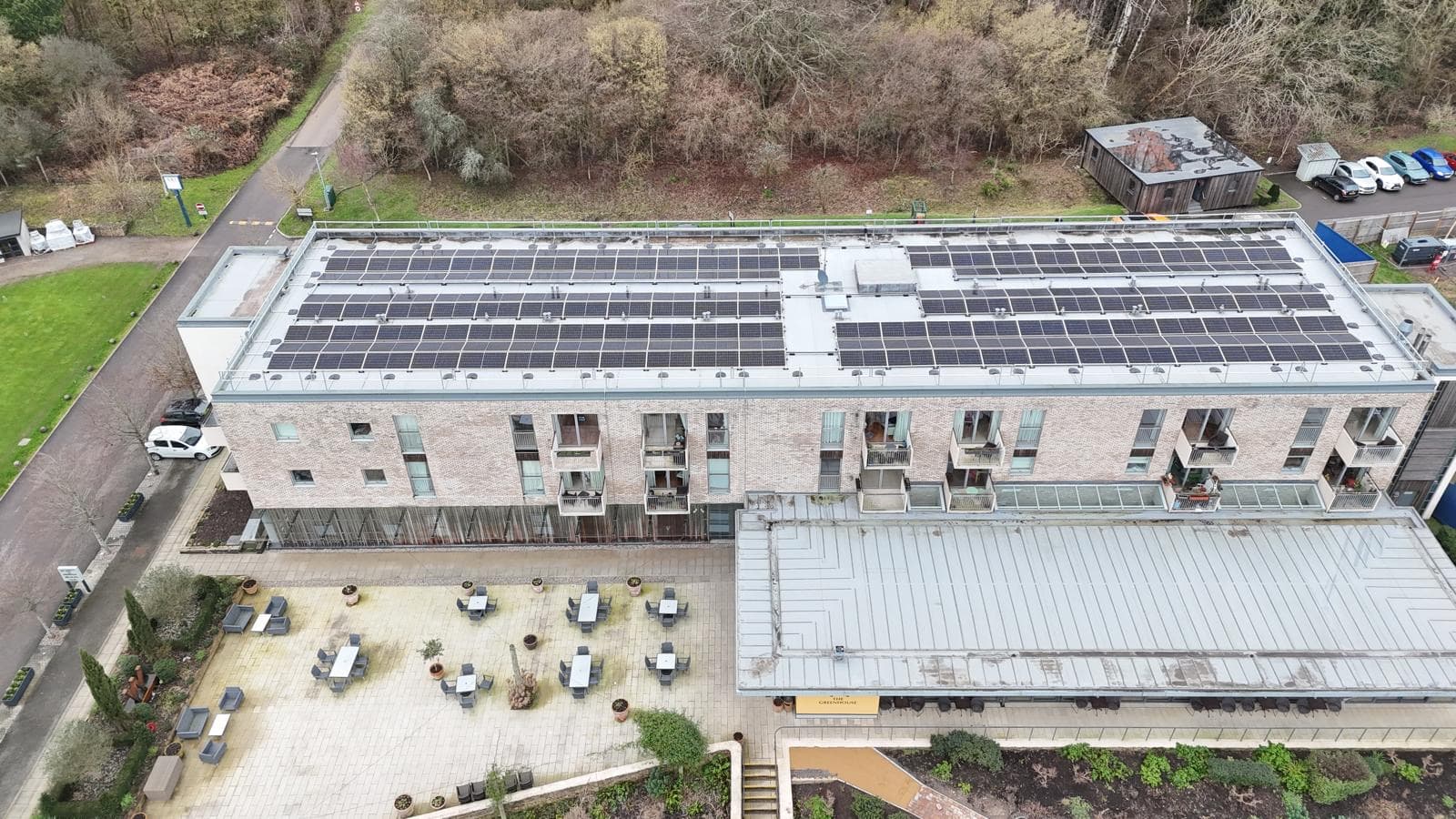
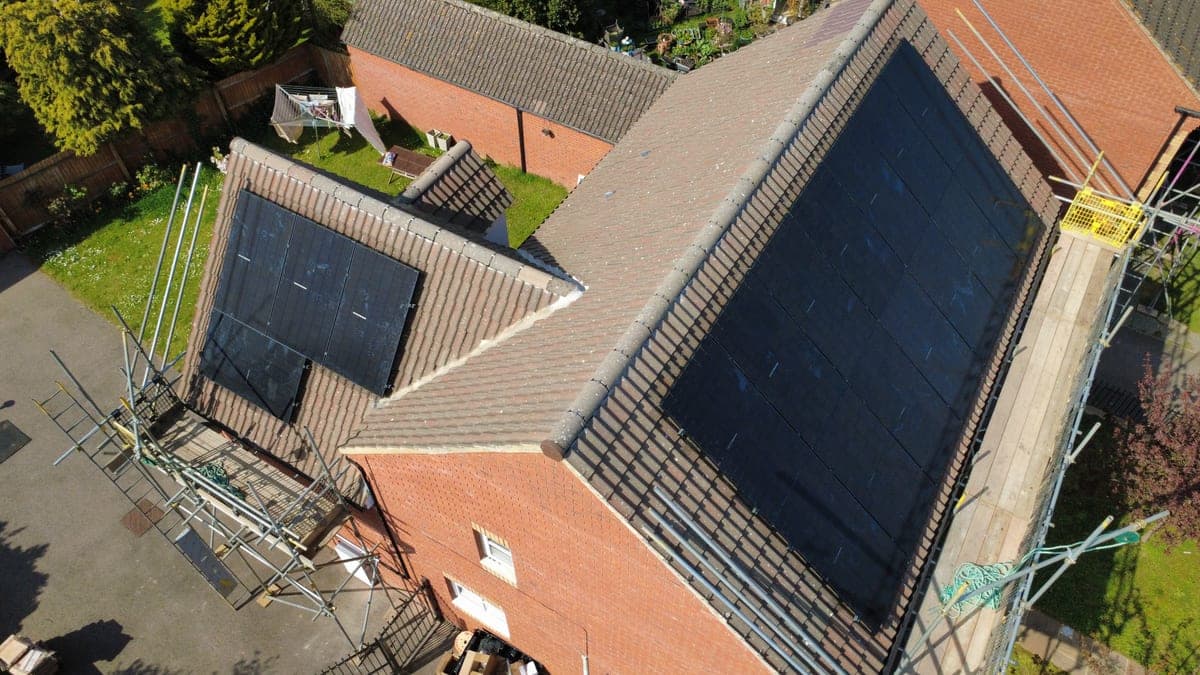
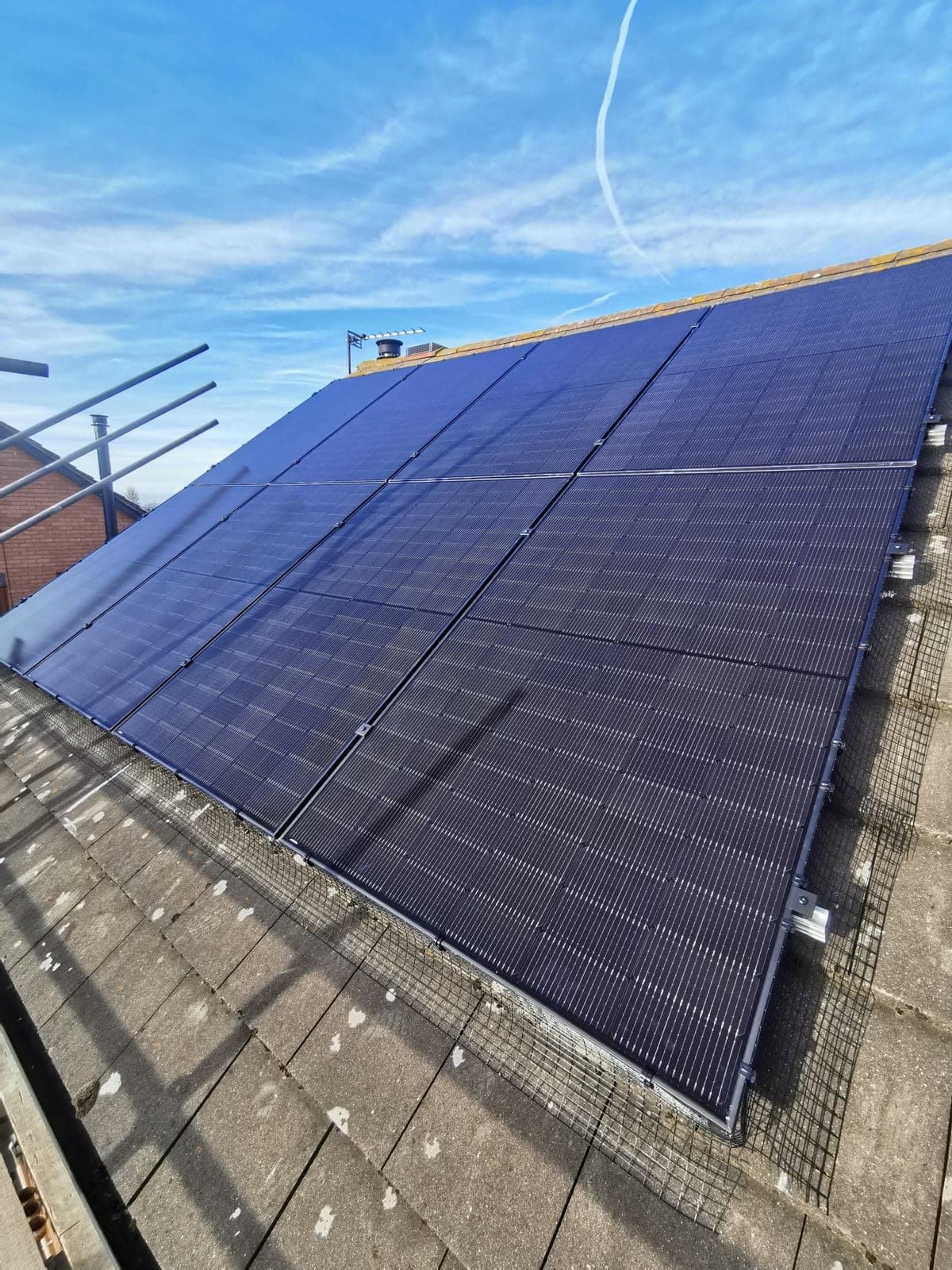
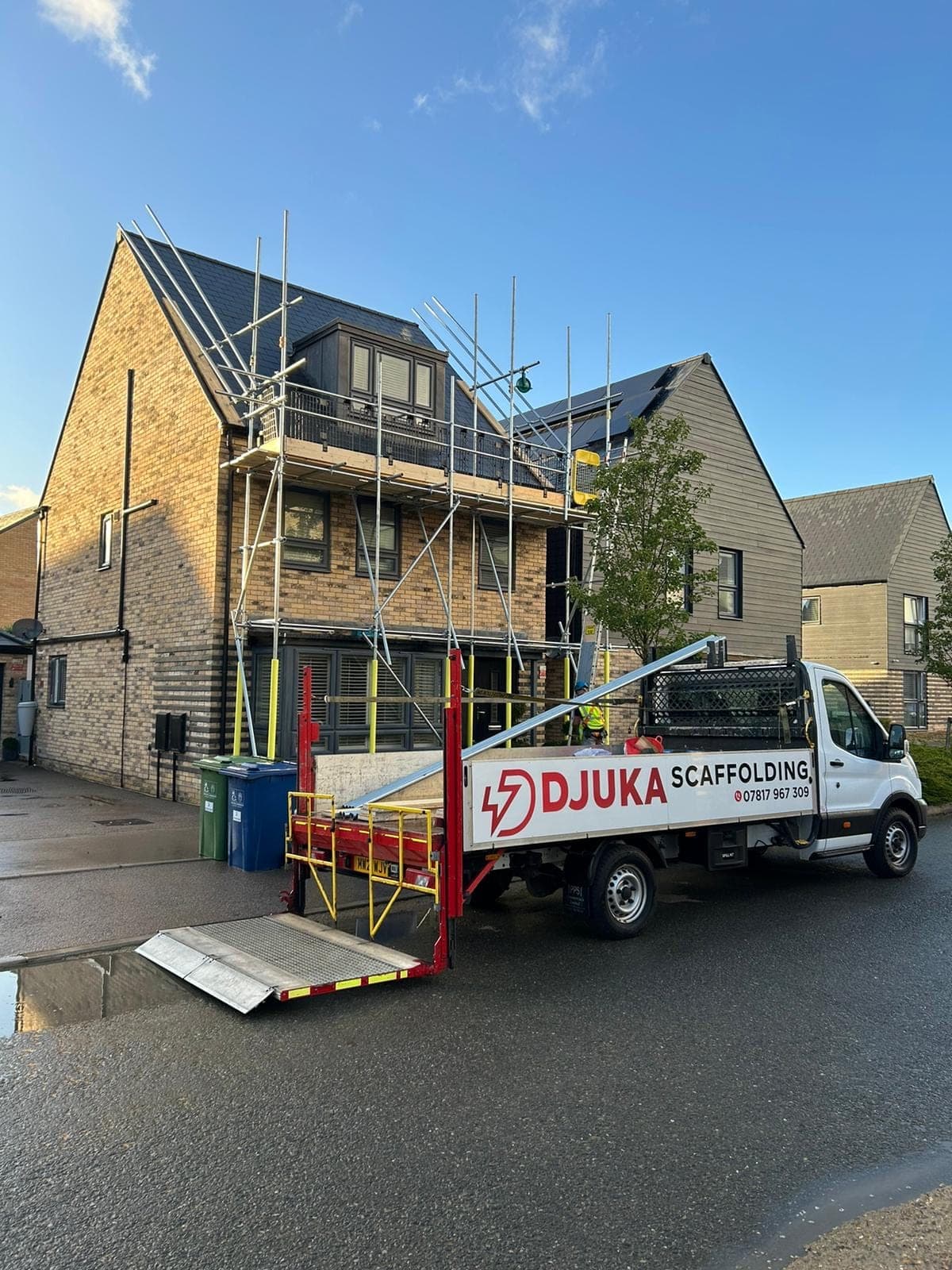
A selection of our recent commercial solar work across the Midlands.
Often booked together
Pairs well with.
Most Birmingham commercial clients now ask about battery storage alongside solar. It allows businesses to store midday generation and use it during evening peak-tariff periods, and is far simpler to integrate when designed as part of the original system rather than retrofitted later.
Businesses installing solar in Birmingham increasingly want EV chargers on the same project, using solar generation to offset charging costs. Combining both under one contractor means the electrical infrastructure is designed to support both loads from the outset.
Roof access for solar installation is a natural point to add external CCTV infrastructure. Running data cabling while the roof is under active works reduces disruption and cost compared to a separate mobilisation later.
Worth knowing
Before you book in Birmingham.
Permitted development rights for commercial solar are more restricted than for domestic installations. Depending on your premises' planning designation, proximity to a conservation area, or listed-building status, you may need prior approval or full planning permission before work can begin. We advise on this at the survey stage.
For systems above 30 kWp, a G99 application to your distribution network operator is legally required before the system can be commissioned. The DNO process takes time and varies by operator. Starting early and having accurate site data is essential to avoid programme slippage on larger projects.
Structural loading on flat roofs must be assessed before any ballasted mounting system is specified. Older industrial buildings in Birmingham may have roof membranes or deck structures that need a structural engineer's sign-off. We flag this at survey and can recommend a structural engineer if required.
FAQs
Birmingham questions.
How long does a commercial solar installation take in Birmingham?
It depends on system size and site complexity. A straightforward rooftop install on a Birmingham warehouse or school might take two to four days on site. Larger systems, or those requiring structural engineer sign-off and G99 DNO approval, will have a longer overall programme because the DNO process runs in parallel with pre-installation work. We give you a realistic programme at the quote stage, not an optimistic one. Contact us for a free survey and we can give you a site-specific timeline.
Do I need planning permission for commercial solar panels in Birmingham?
Permitted development rights cover many commercial solar installations, but the rules differ from domestic. Your building's planning designation, proximity to a conservation area, or listed status can all affect whether you need prior approval or a full planning application. Certain flat-roof installs within Birmingham's industrial and commercial zones are straightforward, while others in historic areas of the city require more care. We review this at the survey stage and advise you before any commitment is made. We do not begin work until the planning position is clear.
What is a G99 application and do I need one?
G99 is the technical application required by your distribution network operator before a generating system over 30 kWp can be connected to the grid. It involves submitting detailed electrical design documentation, protection relay settings, and site information. Most sizeable commercial solar installs in Birmingham will exceed 30 kWp and therefore need a G99 application. We handle this entirely in-house. The process takes several weeks depending on the DNO's workload, so we submit as early as possible in the project programme to avoid delays to your commissioning date.
Can commercial solar work on a flat roof?
Yes, and the majority of Birmingham's commercial rooftops are flat or near-flat. Flat-roof installs use ballasted or mechanically fixed mounting systems that angle the panels optimally without penetrating the roof membrane. The key considerations are roof condition, load-bearing capacity, and membrane type. We assess all of these at the site survey. If a structural engineer's report is required before we can specify the mounting system, we flag this transparently in the quote so there are no surprise requirements after you have committed.
Will commercial solar panels reduce our ESG or net-zero reporting figures?
Yes, in a meaningful way. Solar generation displaces grid electricity that carries a carbon intensity figure in your Scope 2 emissions. The MCS certificate and monitoring data we provide give your sustainability team auditable generation figures for annual reporting. Many Birmingham businesses and public-sector organisations now require suppliers and tenants to evidence carbon reduction activity; a commissioned solar system with documented output provides exactly that evidence. We include monitoring setup and documentation in every installation so reporting is straightforward from day one.
Do you install commercial solar for schools and care homes in Birmingham?
Yes. Schools, academy trusts, and care homes across Birmingham are among the organisations we work with regularly. Both sectors have high daytime electricity consumption that aligns well with solar generation profiles, and both face pressure to evidence cost reduction and environmental responsibility. We are familiar with the procurement and approval processes that apply to educational and care settings, and we produce the full documentation those organisations typically need, including MCS certificates, electrical test results, and commissioning reports, as a standard part of every handover.
Our commitment
We take on a controlled number of commercial projects each month. That is not a marketing line; it is how we maintain quality. Large commercial installs involve structural surveys, DNO correspondence, multi-day installation programmes, and detailed commissioning. Stretching the diary thin on all of those stages is how errors creep in. If you contact us now, we will give you an honest indication of current lead times at the survey stage.
Who we are
Djuka Electrics is based in Beoley, Redditch, and covers Birmingham and the wider West Midlands regularly. We are MCS-certified for solar PV and NAPIT-registered for electrical installation. Every commercial project generates a full photographic record and signed commissioning documentation. You can read reviews from local customers on our website and Google listing before you commit to anything.
Want everything we offer in Birmingham? Solar, battery storage, EV charging, electrical work and CCTV are all on our Birmingham services page.
Birmingham hubNearby
Commercial Solar near Birmingham
More in Birmingham
Other services we offer here
Ready for your free commercial solar quote in Birmingham?
Send your postcode and a few details. Within 24 hours you’ll have an honest, written quote from a qualified Midlands electrician, no pushy sales calls, no hidden charges.