What is the Warm Homes Loan?
The Warm Homes Loan is a government-backed lending scheme designed to help UK households pay for energy-saving home improvements without a large upfront cost. Loans are repaid over many years, with some options being interest-free and others running for up to 30 years.
According to the GOV.UK Warm Homes Loan factsheet (October 2026), the scheme offers rates of up to 5% lower than standard personal loans. To illustrate what that means in practice, GOV.UK gives this example: a £10,000 loan at 8% over 7 years works out at around £155 a month, and the scheme could save up to £285 a year on repayments compared with a loan available today.
What the loan covers
The scheme covers a range of clean energy technologies, including heat pumps. For solar panels and batteries specifically:
- Solar panels (up to £15,000)
- Home battery storage (up to £15,000)
EV chargers are not covered. The loan is for households, not businesses.
What you need to qualify
- You must use an MCS-certified installer
- The lender carries out its own credit and affordability checks
- You apply directly to a lender using a written quote from your installer
- Some lenders only work with their own partner installers, so if you would like Djuka to fit your battery, check that the lender accepts any MCS-certified installer before applying
Lenders that accept any MCS-certified installer can fund a Djuka battery installation today, and your written, itemised Djuka quote is what you apply with. We are also working towards becoming a partner installer with participating lenders, so you will be able to arrange finance alongside your Djuka quote. We will update this page when that is in place.
Why do solar owners add a battery?
Solar panels generate electricity during daylight hours. Without a battery, any power your panels produce that you do not use at that exact moment is exported to the grid, often at a rate far lower than what you pay to import electricity later in the day.
A battery closes that gap. It stores the surplus your panels generate during the day so you can draw on it in the evening, when your panels are no longer producing. For most households, that is precisely when energy demand is highest: cooking, heating, lighting, and charging devices all tend to happen after dark.
Two main reasons people add a battery
1. Storing daytime solar for evening use
Instead of sending spare generation to the grid and then buying electricity back at peak rates, a battery lets you use what your own panels already made. You have already paid for the panels; a battery simply lets you get more from them.
2. Charging on cheaper overnight tariffs
Time-of-use tariffs charge less for electricity overnight than during the day. A battery can be set to charge from the grid during those cheaper overnight hours, giving you a low-cost reserve to draw from the following day alongside whatever your panels generate.
Neither of these benefits requires new panels. They are available to anyone with an existing solar installation and a compatible battery system.
Do home batteries get 0% VAT?
Home batteries currently attract 0% VAT, as do solar panels. This zero rate is in place until 31 March 2027.
If you are considering a battery, acting before the end of March 2027 means you benefit from both the zero VAT rate and the Warm Homes Loan at the same time.
How does Djuka survey your existing system?
Adding a battery storage installation to an existing solar system is not simply a matter of bolting on a box. The new battery needs to be compatible with your current setup, and that requires a proper assessment before any work begins.
When you book a survey with Djuka Electrics, the engineer checks your existing system as part of the visit. This includes:
- Your current inverter and whether it is compatible with the battery being specified, or whether a replacement or additional hybrid inverter is needed
- Your generation figures and how the battery should be sized to match your typical export
- Your consumer unit and wiring to confirm the installation meets current electrical regulations
- Your property's suitability for the specific battery model being recommended
This assessment is what makes the written quote meaningful. The quote Djuka provides is itemised, covers all labour and materials, and contains no hidden costs. It is also the document your lender will need to process a Warm Homes Loan application, so it needs to be accurate and detailed.
Djuka Electrics is MCS-certified, which is a requirement of the scheme. It is also NAPIT-registered, meaning all electrical work is carried out to the standards required for domestic electrical installations.
Which batteries does Djuka install?
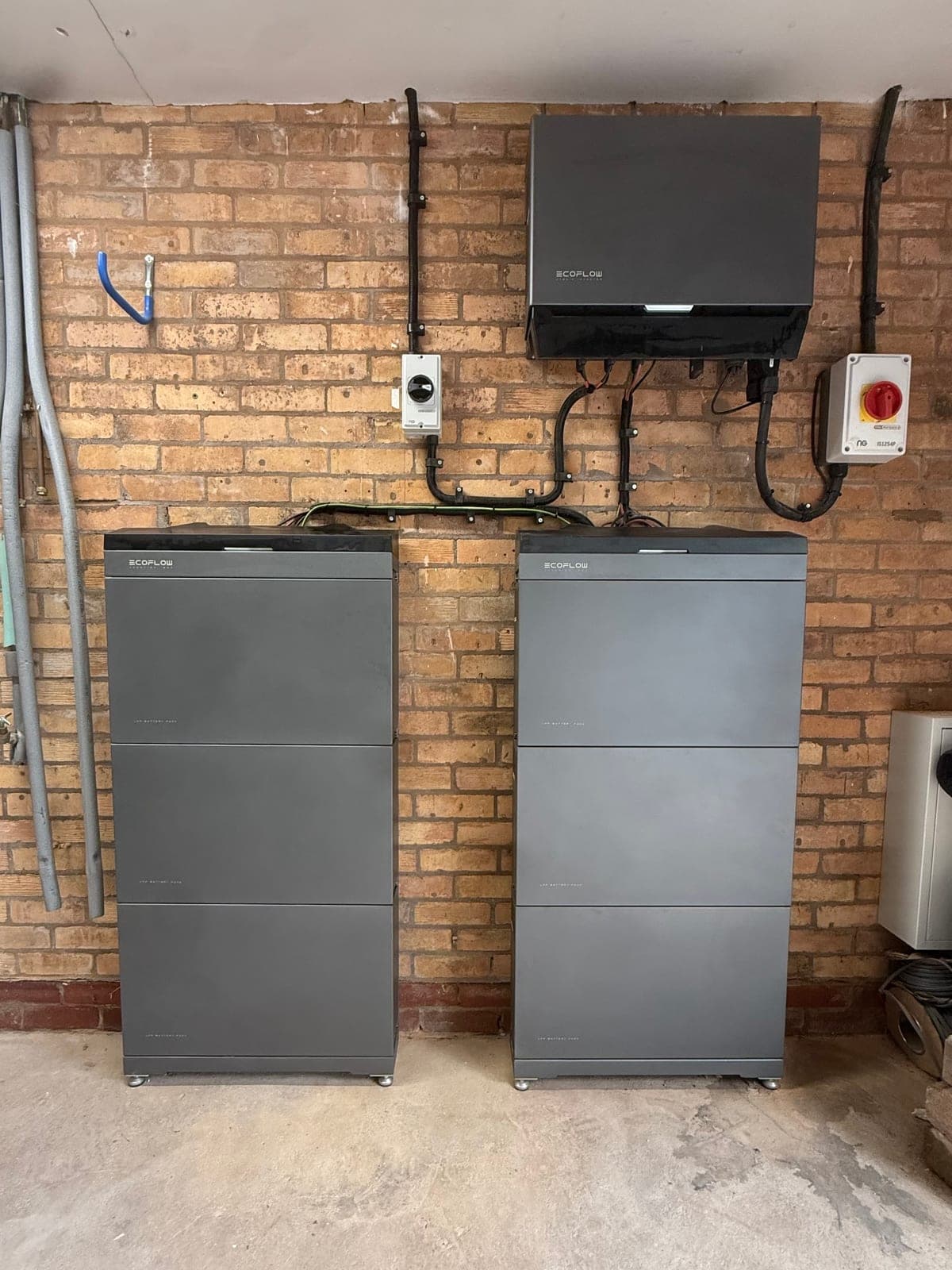
The batteries Djuka Electrics fits include Tesla Powerwall 3, Fox ESS and EcoFlow, chosen for reliability, performance, and long-term support. For a fuller comparison of the options, see our guide to the best home battery storage in the UK.
| Battery | What it is known for |
|---|---|
| Tesla Powerwall 3 | All-in-one hybrid inverter and battery; well-suited to homes that want a single integrated unit |
| Fox ESS | Flexible system with a strong range of capacities; popular for retrofit to existing solar |
| EcoFlow | Modular design that can be expanded; useful where future capacity increases are likely |
The right choice depends on your existing inverter, the physical space available, and how you plan to use the battery. The survey is where that decision gets made properly, not before.
How does the process work?
From first enquiry to installation, the process is straightforward:
- Step 1: Request a free quote from Djuka Electrics. The survey is free and comes with no obligation.
- Step 2: Receive your written, itemised quote. This covers all costs and is the document your lender will ask for.
- Step 3: Apply to a participating lender using your Djuka quote. If you would like Djuka to fit your battery, choose a lender that accepts any MCS-certified installer, as some only work with their own partner installers. The lender runs its own credit and affordability checks.
- Step 4: Once approved, installation is booked. Djuka handles the full installation and all MCS certification paperwork.
- Step 5: After installation, you receive the MCS certificate. Keep it alongside the quote, finance agreement and invoice, as GOV.UK recommends.
Djuka Electrics covers homes within approximately 50 miles of Beoley, Redditch, taking in much of the West Midlands, Worcestershire, Warwickshire, and surrounding areas. The business is rated 4.9 on Trustpilot.