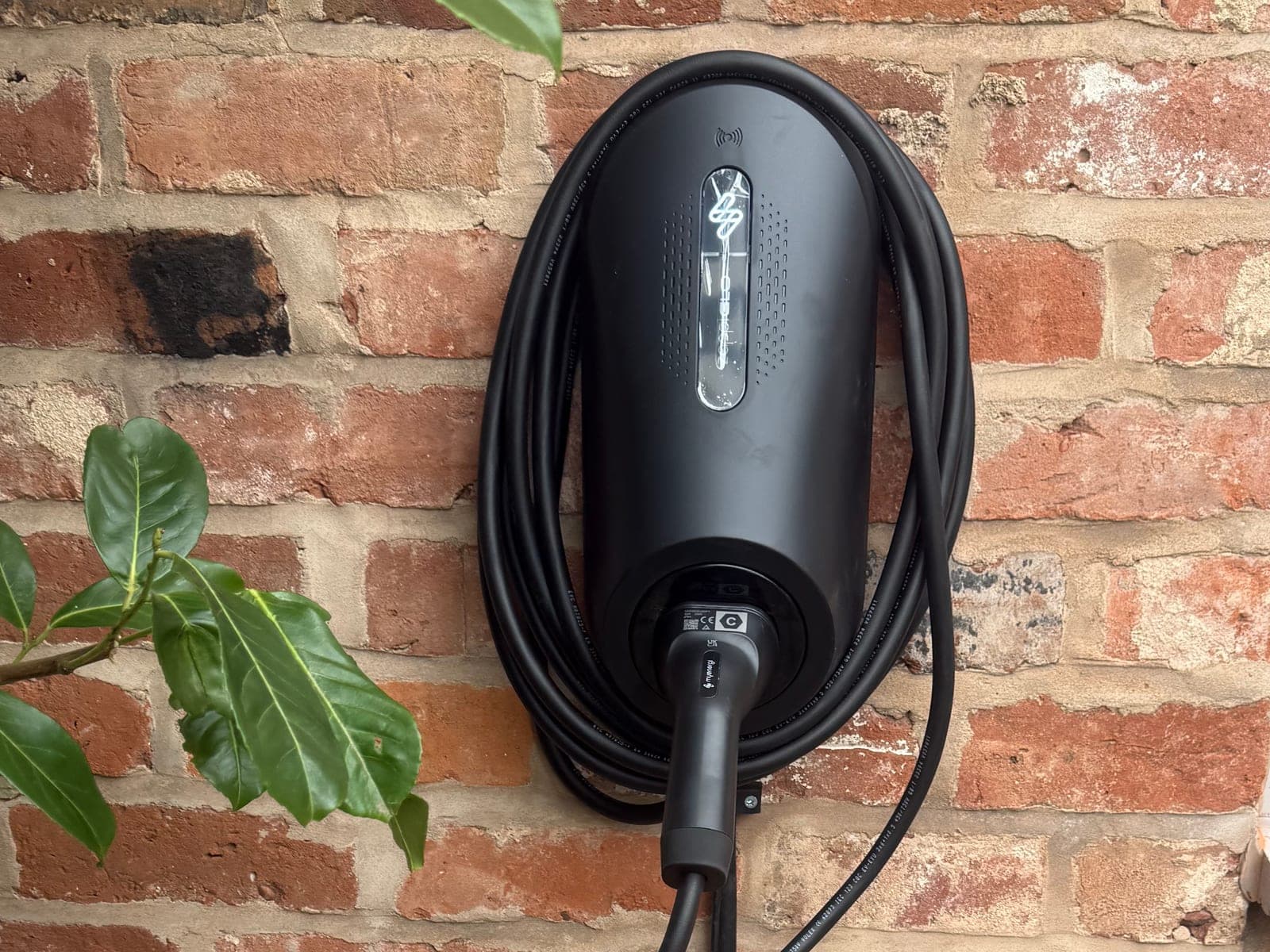
How much does it cost to install a home EV charger?
For a standard home installation, the typical market range across the UK sits broadly between £700 and £1,200 for supply and fit of a 7kW smart charger. That assumes a consumer unit in good condition, a short cable run, and no need for groundworks or a supply upgrade. Some installations cost more, and it is worth understanding why.
As a rough industry guide, the following scenarios tend to add to the base cost: - A long cable run from the consumer unit to the charge point. - A consumer unit upgrade if your existing fuse board lacks capacity or protection. - Earthing upgrades, which some older properties require. - Groundworks or trenching to run cable to a detached garage. - Three-phase supply work, for properties that need it.
The only accurate figure comes from a qualified installer carrying out a survey. Djuka Electrics offers free, no-obligation quotes and will always explain exactly what is included before any work begins.
What affects the cost of an EV charger installation?
The base unit price is only part of the story. Here is what actually drives the final cost.
Cable run distance
The further the cable needs to travel from your consumer unit to the charge point, the more materials and labour are involved. A charger fitted close to your fuse board is a quick job. One at the far end of a driveway, or on the opposite side of the house, requires a longer run, more time, and more cost.
Consumer unit condition
An EV charger draws a continuous load, and your consumer unit needs to handle it safely. If your fuse board is old, lacks RCD protection, or has no spare way for the new circuit, it will need upgrading first. A consumer unit upgrade is a separate piece of electrical work and adds to the overall job. It is a safety requirement, not an optional extra.
Earthing
Some older properties use a TT earthing arrangement that requires an earth rod before a charger can go in. Your installer will check this during the survey. It is straightforward but does add a small amount to the cost.
Groundworks for detached garages
If you want your charger on a detached garage, an armoured cable will need to be run underground between the house and the garage. Trenching, laying ducting, and reinstating the surface all take time, and the length and surface type of the run affects the price.
Single-phase vs three-phase supply
Most UK homes have a single-phase supply, which supports up to a 7kW charger. Some larger properties have three-phase, which can support 22kW. Your installer will confirm which you have during the survey.
What is the difference between a 3kW, 7kW and 22kW charger?
Charger speed is measured in kilowatts (kW). The higher the number, the faster your car charges, provided your car's onboard charger can accept that rate.
3kW (slow charging)
This is essentially a reinforced three-pin plug. It can take 20 hours or more to charge a modern EV from low to full and is rarely recommended as a permanent home solution.
7kW (fast charging)
This is the standard domestic choice. It works with a single-phase supply, charges most EVs in six to twelve hours, and supports smart scheduling for cheaper overnight tariffs. For most households across Redditch, Bromsgrove, Solihull and Worcestershire, this is the right answer.
22kW (rapid home charging)
This requires a three-phase supply, which most UK homes do not have. Many EVs cannot accept the full 22kW rate anyway, so unless you have a specific reason and three-phase already in place, a 7kW unit is almost always the more practical choice.
The bottom line: for the overwhelming majority of homeowners, a 7kW smart charger is the right answer. It is fast enough for everyday use and works with a standard household electricity supply.
Tethered vs untethered chargers: which should I choose?
Tethered chargers have a cable permanently attached. You take it off its hook and plug in, which is convenient and quick. They suit households where everyone drives the same EV type or uses the same connector, which for AC home charging is the Type 2 standard on most modern EVs.
Untethered chargers have a socket on the unit and no attached cable. You use your own cable, as you would at a public charge point. They suit households with more than one EV using different connectors, or where you want the flexibility to swap cables without replacing the unit.
For most households with a single modern EV, tethered is the more convenient option. If you have two EVs of different makes, untethered gives you more flexibility. Cost and installation are broadly the same either way.
Are there any grants for home EV chargers?
This is an area where it is important to be accurate, because the situation has changed and there is a lot of outdated information online.
The UK Government's EV Chargepoint Grant, administered through OZEV, no longer covers most homeowners who own their property and have a driveway. The grant has been restructured and is now primarily available to: - Renters and those in flats who cannot install a charger without landlord involvement. - Landlords installing chargepoints for their tenants. - Owners of flats or leasehold properties in certain circumstances.
If you own your home and have off-street parking, you are unlikely to qualify for the current domestic grant. Grant eligibility rules do change, so we would always recommend checking current government guidance before assuming you do or do not qualify.
The good news is that a home EV charger typically pays for itself over time through the savings of charging at home rather than using public charge points, particularly if you are on a time-of-use tariff with cheaper overnight rates.
Can I charge my EV from solar panels?
Yes, and for many homeowners this is where EV ownership becomes genuinely compelling from a cost perspective.
If you have solar panels, you can configure your EV charger to prioritise charging using the surplus electricity your panels generate during the day. On a sunny afternoon in the West Midlands, a well-sized solar array can put meaningful range into your car using energy that would otherwise be exported to the grid for a modest tariff.
The combination works even better with a home battery. A system such as a Tesla Powerwall stores solar energy generated during the day and makes it available in the evening, when most people want to charge. You generate during the day, store it in the battery, and charge the car overnight using your own energy.
For homeowners who want to reduce running costs as much as possible, the solar plus battery plus EV charger combination is the most complete solution. As an MCS-certified installer, Djuka Electrics designs and installs integrated systems across Worcestershire and the West Midlands, and we can assess whether your property is suitable for solar as part of the same conversation as your EV charger enquiry.
How long does an EV charger installation take, and what is involved?
For a standard home installation with no complications, most EV charger installs are completed in half a day, typically three to four hours. Jobs requiring a consumer unit upgrade or groundworks for a detached garage will take longer and may be spread across two visits.
Here is what the process generally involves: - Survey: a qualified installer assesses your consumer unit, identifies the best cable route, checks your earthing arrangement, and confirms the most suitable charger location. This is the step that uncovers any additional work required. - Cable installation: a dedicated circuit is run from your consumer unit to the charge point location. - Charger fitting: the unit is fixed to the wall and connected to the circuit. - Testing and commissioning: the circuit is tested to current wiring regulations, and the charger is set up and connected to your home Wi-Fi if it is a smart unit. - DNO notification: your installer is required to notify your Distribution Network Operator as part of the process. A reputable installer handles this on your behalf. - Certification: you receive an Electrical Installation Certificate for the work, which you will need for insurance purposes and if you ever sell your property.
At Djuka Electrics, our in-house team handles every stage. We do not subcontract the electrical work.
How do I choose a good EV charger installer?
The EV charger installation market has grown quickly, and not all installers offer the same level of competence or accountability. Here is what to look for.
Qualifications and accreditations
EV charger installation must be carried out by a qualified electrician. Look for installers registered with a recognised body such as NAPIT or NICEIC. For installers who also offer solar and battery work, MCS certification is the relevant accreditation. Djuka Electrics is both MCS certified and NAPIT approved.
OZEV approval
If you are hoping to access any available government grants, your installer needs to be OZEV-approved. Confirm this before you book.
Reviews and reputation
Independent review platforms give you a realistic picture of how an installer performs. Djuka Electrics holds a Trustpilot rating of 4.9 from 82 reviews, with customers consistently highlighting clean workmanship and clear communication.
In-house teams vs subcontractors
Some companies take your booking and send a subcontractor. At Djuka Electrics, the same in-house team that surveys your property carries out the installation, and all work is backed by a workmanship guarantee.
Local knowledge
A local installer familiar with the Redditch, Bromsgrove and Worcester area will know the common challenges, such as earthing arrangements in older Worcestershire properties or detached garage cable runs, and will be genuinely accessible after the job is done.