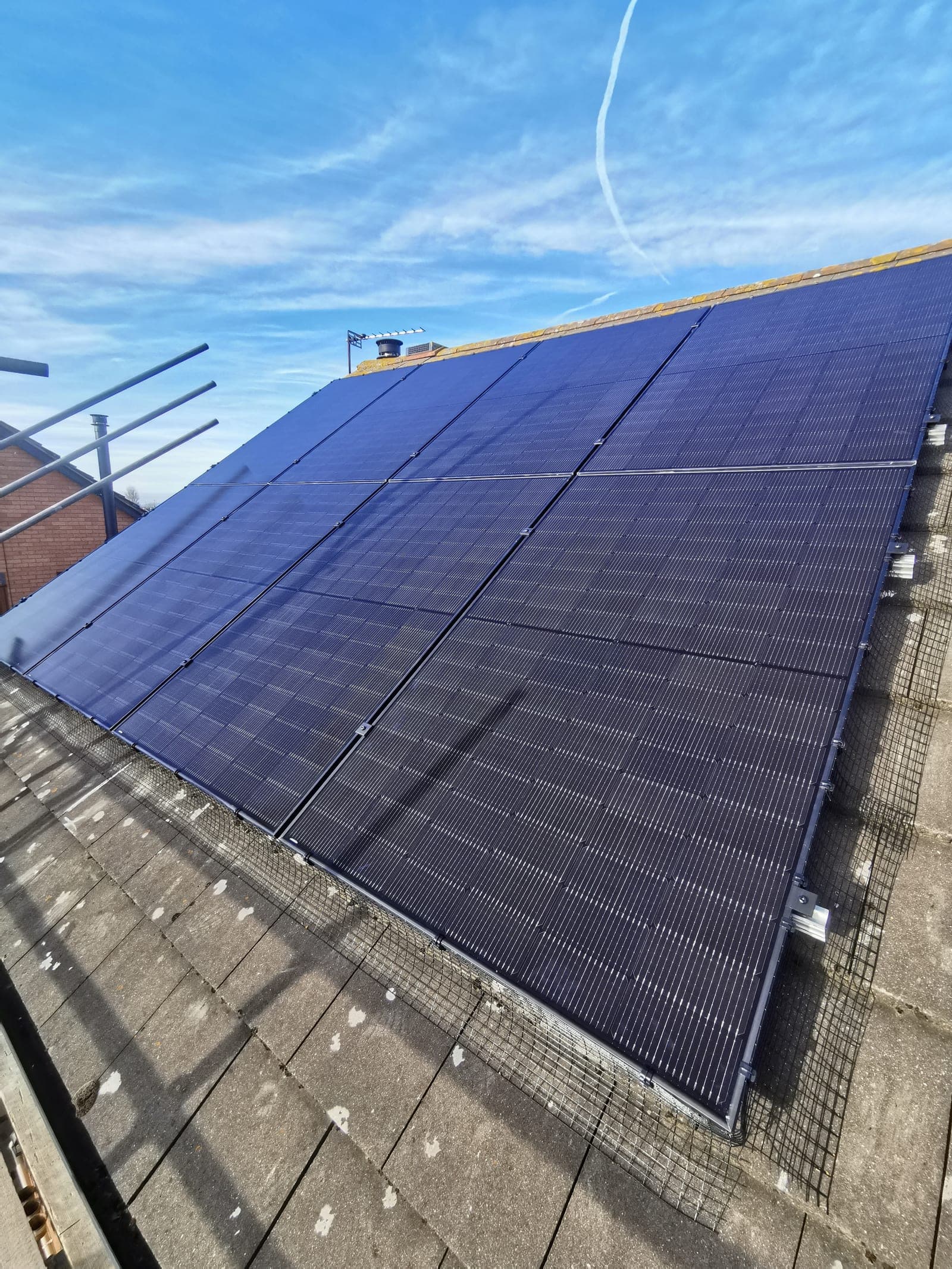
How do solar panels actually work?
Solar panels are made of photovoltaic (PV) cells, usually silicon. When daylight hits a cell, it knocks electrons loose and creates a flow of direct current (DC) electricity. Daylight is the trigger, not heat, which is why panels still generate on cool, bright days.
The DC electricity then passes through an inverter, which converts it into the alternating current (AC) your home actually uses. From there it flows to your consumer unit (fuse board) and powers whatever is switched on at the time.
The sequence is simple: - Panels capture daylight and produce DC electricity. - An inverter converts DC into usable AC. - Your home uses that electricity first, before drawing anything from the grid. - Any surplus is either stored in a battery or exported back to the grid.
Do solar panels work in winter and on cloudy days?
Yes, just less. Panels respond to light levels, so output drops on overcast days and in the shorter winter months, but it does not stop. A UK solar system typically produces the bulk of its energy between March and October, with a quieter winter.
This is why we size a system around your annual usage, not a single sunny day. A well-designed system banks plenty of generation through the lighter months to offset the leaner ones.
How much can solar save on my electricity bill?
Savings come from two places: the electricity you no longer buy from the grid, and any payment you receive for exporting surplus. The more of your own generation you use directly, the better the return.
The households that save the most tend to: - Use electricity during daylight hours, when the panels are generating. - Add a battery to store daytime surplus for evening use. - Run higher-consumption items (washing, dishwasher, hot water, EV charging) during the day.
We do not publish fixed figures, because your saving depends on your roof, your tariff, and your usage. What we do is model it honestly for your specific property as part of a free written quote.
Are solar panels worth it for my home?
Solar tends to be worth it when several of these are true: - Your roof faces somewhere between east and west, ideally south, and is not heavily shaded. - You have a reasonable amount of unshaded roof space. - You use a fair share of electricity during the day, or you are willing to add a battery. - You plan to stay in the property long enough to see the payback.
It is less compelling if your roof is small, north-facing and shaded, or if you are out all day with no battery and very low usage. We will tell you straight if your property is not a good candidate. An honest no costs us nothing and earns trust.
Does solar add value to my home?
A well-installed, owned (not leased) solar system with proper certification is generally viewed as a positive by buyers, because it lowers running costs and signals a well-maintained home. The effect varies by property and market, so treat it as a useful side benefit rather than the main reason to install.
What maintenance do solar panels need?
Very little. There are no moving parts in the panels themselves. Rain keeps most roofs clean enough, and a properly installed system is designed to run for decades with minimal attention.
The sensible checks are an occasional visual inspection, keeping panels clear of heavy debris or moss shading, and being aware that the inverter is the component most likely to need attention over the long life of the system. We cover all of this when we hand over a completed install.